

1. Integrated Components on the Flex
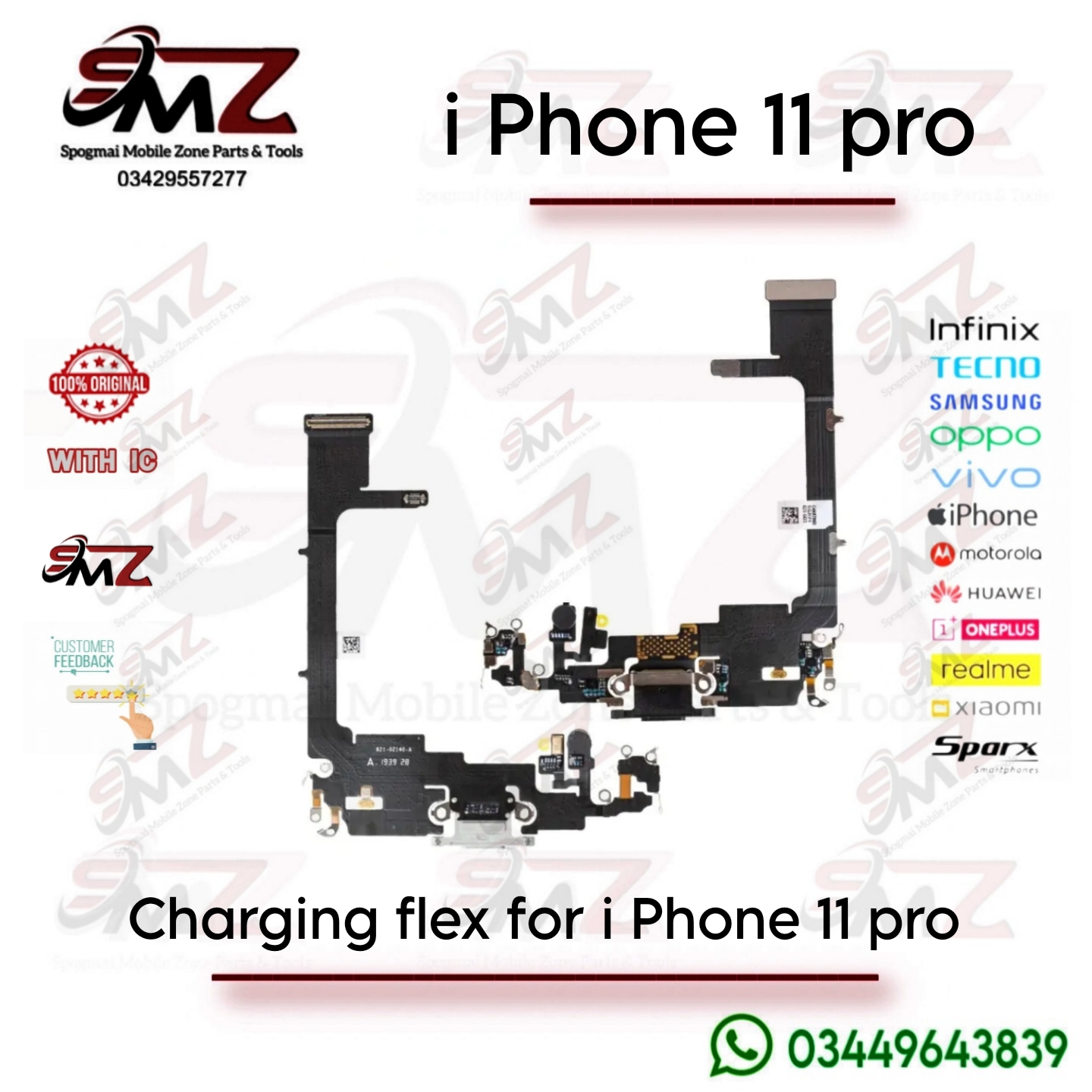
The charging port is not just a standalone USB/Lightning plug. It is an all-in-one ribbon cable assembly that integrates several major sub-systems:
-
- Lightning Connector: For power delivery, battery charging, and USB data syncing.
- Primary Audio Microphones: The bottom microphone used for voice calls, audio recordings, and voice inputs is embedded directly onto this flex.
- Cellular & Wi-Fi Antenna Loops: Houses grounding pins and contacts connecting the primary wireless/LTE antenna loops to the housing.
- Thermal Sensors & Barometer/Pressure Sensors: Crucial system sensors required by iOS to monitor internal device temperatures.
2. Why the “With IC Chip” Version Matters
When browsing third-party marketplaces (like smz ), you will see options for “With IC” vs “No IC”.
The IC board on this specific flex acts as a bus and a sub-charging controller. If you install a cheap, aftermarket version without the IC chip, you will experience severe issues:
-
- The 3-Minute Boot Loop: iOS checks the internal thermal sensors on the charging port flex. Without a high-quality IC to communicate this data, the iPhone will automatically restart every 3 minutes.
- No Fast Charging: Non-IC versions limit power delivery to slow, basic charging speeds.
- Signal Drop-offs: Lower quality clones degrade cellular and Wi-Fi data reception.
- Data Transfer Failure: The device may fail to be recognized by a computer or Mac via USB.
3. Common Symptoms This Part Fixes
Replacing this full assembly will resolve the following physical or electrical faults:
- The phone only charges if the Lightning cable is held or wiggled at a specific angle.
- A completely dead port caused by liquid exposure, corrosion, or physically bent interior pins.
- The device charges but callers cannot hear you because the integrated lower mic is broken.
- Constant random power-cycling (restarting) after moisture enters the charging port area.


Reviews
There are no reviews yet.