

🛠️ Technical Specifications & Functionality
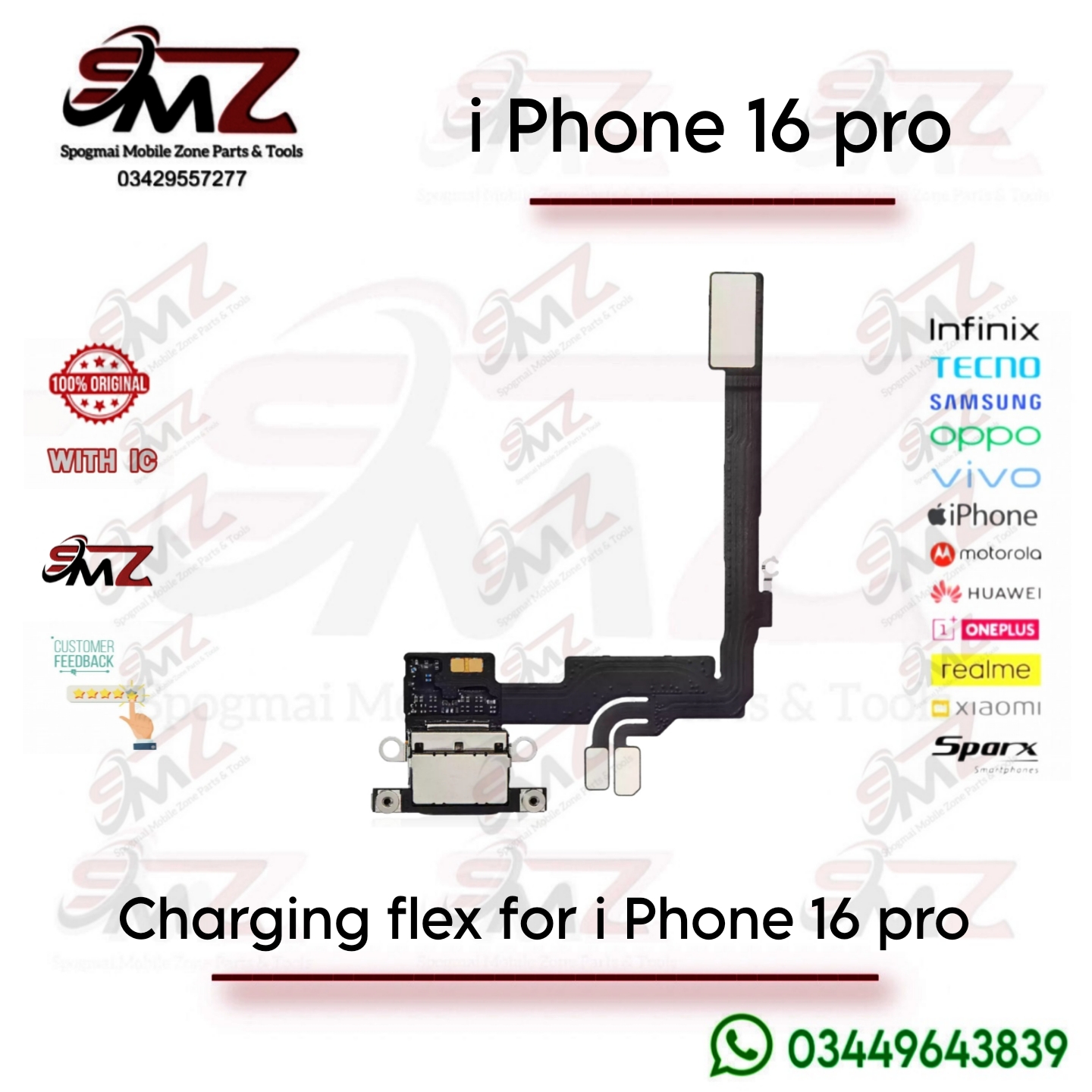
The replacement charging flex serves multiple core hardware roles beyond just passing current:
-
- Power Delivery & Protocol IC: The on-board IC manages the USB-C Power Delivery (PD) protocol handshaking. This allows the phone to safely negotiate fast-charging voltages and currents. Standard aftermarket flex clones lacking a high-quality IC can cause thermal stress, restricted charging speeds (or freezing), and “Accessory Not Supported” errors.
- High-Speed Data Sync: The iPhone 16 Pro relies on this flex to support its USB 3 data speeds (up to 10 Gbps). Low-tier replacement ribbons without the proper IC architecture often downgrade data transfer rates to USB 2.0 speeds (480 Mbps) or fail to sync with computer ports entirely.
- Unified Peripherals: This single module houses the physical USB-C socket, the primary bottom microphone, and the contacts for the lower GSM/cellular network antenna.
⚠️ Common Symptoms Fixed by This Part.
Replacing this flex assembly typically resolves the following hardware faults:
- Complete failure to take a charge or draw current.
- Loose, physically damaged, or burnt USB-C port pins.
- Intermittent charging that requires bending or pushing the cable.
- A persistent “Moisture Detected” warning that won’t clear even after the port is completely dry.
- People being unable to hear you during standard calls (due to a failed bottom microphone).
- Weak cellular signal drops tied to lower antenna contact damage.



Reviews
There are no reviews yet.